All capabilities
Type III Finish / Surface capability
Hard Anodizing
A dense functional layer engineered for demanding mechanical duty.
Discuss this finishRPI / HARD-ANODIZING
CONTROLLED SURFACE SYSTEM
Overview
A surface engineered around the part.
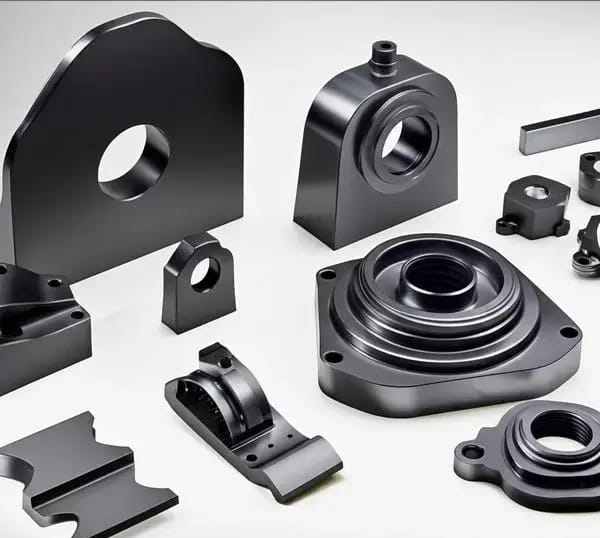
Low-temperature process control (0°C to 5°C) creates an exceptionally dense, glass-hard oxide surface for parts exposed to extreme friction, pressure, wear, and aggressive operating environments.
Our process planning considers alloy series, machining condition, dimensional sensitivity, racking position, visual zones and service environment before production begins in our Rajkot plant.
Technical Parameters
Process Specifications
Coating Thickness25 – 50+ Microns
Process Standard Type III Hardcoat
Hardness Rating400 – 550 HV (Vickers)
Dielectric StrengthUp to 2000 Volts
Bath TemperatureChilled Electrolyte (0°C – 4°C)
01
Surface hardness (60-65 HRC)
02
Abrasion resistance
03
Dielectric breakdown
04
Friction reduction
05
Thermal resistance
06
Impact durability
Process ArchitectureControlled from substrate
Controlled from substrate
to sealed surface.
Parameters are specifically adapted for hard anodizing, part geometry and approved quality requirements.
01
Precision masking & bespoke racking
02
Chilled electrolyte tank processing
03
High voltage pulse-current oxide growth
04
Optional PTFE / dry lubricant impregnation
05
Taber abrader & micro-hardness validation
Target Applications
Designed for performance.
Hard Anodizing is specifically developed around the functional and visual demands of these key component types.
01
Hydraulic cylinders
02
Aerospace fixtures
03
Pistons & valves
04